

Hey everyone,
I keep noticing the same pattern: conversations about AI in product always land on speed. Faster prototyping, faster shipping, faster iteration. But the sharper practitioners I follow are pointing somewhere else… Building got easier. Winning didn’t!
The real edge has shifted to product quality, decision-making, and how we think about what software should actually become.
Please support this newsletter by sharing it with your colleagues or liking it (tap on the 💙).
Enjoy!
🍭 Snacks
#1
Coding got easier. Winning with AI products didn’t. Here’s why. • 14 min read • #strategy #AI
AI has made building much cheaper. But it hasn’t removed the hard parts of creating a product people actually want, nor made it easier to be profitable. It basically made our job much more important!
Shipping faster is not the same as winning faster. Distribution, trust, retention, positioning, and differentiation still matter, and in some ways, they matter even more now that the barrier to building has dropped for everyone.
AI features come with a lot of new challenges. First and foremost, it erodes SaaS margins, and most teams still can’t monetize them.
The teams pulling ahead are investing in product quality, not just execution velocity. See what Simon Willison has to say about it in the last link of this edition.
#2
How AI Prototyping Fuels Better Product Decisions • 9 min read • #execution #AI
One of the most practical consequences of AI is that we can all prototypes ideas now. I know I do all the time (in Lovable, Openclaw, Cursor or Codex) in order to explore with discipline.
Cheap prototyping means we can test more options before committing to any of them. Force yourself into 3-5 different directions, compare, and pressure test with stakeholders, and users before you build.
The value isn’t “we made a prototype,” it’s “we improved the quality of the decision & specs”. Shipping speed is not the point as I already explained in #1.
More options explored upstream means fewer expensive pivots downstream. Better choices are what will compound into beating the competition.
AI lowers the cost of being wrong early, which is exactly when you want to be wrong.
#3
Your users aren’t human anymore; start building for agents today • 15 min read • #design #AI
Unless you work for one of the big established softwares, this perspective is still nascent. But more and more products will be evaluated, filtered, or mediated by agents before a human ever touches them.
Good UX now has two audiences: the human and the agent. What makes an interface clear and trustworthy is starting to diverge depending on who, or what is evaluating it.
This changes what product teams should optimize for. Legibility, structure, and accessibility matter more when agents are in the loop. In a lot of case your API will be the primary interface. That’s also why so many companies are rushing to release their CLI.
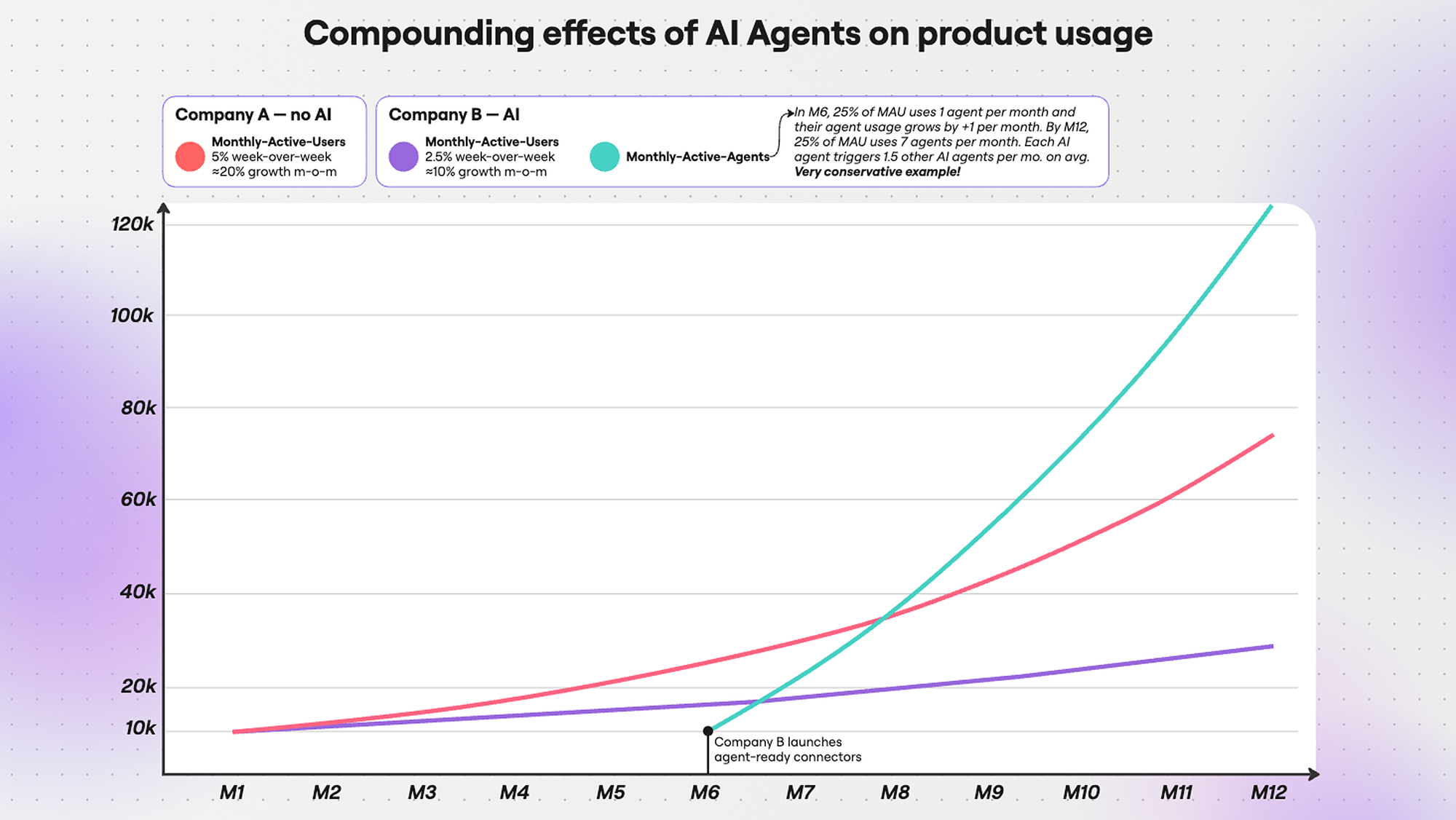
Start measuring MAA (Monthly Active Agents) now, not just MAU. And adapt your pricing and analytics to this new reality.
#4
Malleable software: Restoring user agency in a world of locked-down apps • 20 min read • #essay #design
If building becomes cheaper, the opportunity isn’t to ship more locked-down software faster. It’s to create software that gives people real control over their tools… Might be an utopia, but this malleability could reinforce the initial promise of open-source!
A few weeks ago, I experienced such a transformative revelation when using my openclaw. The more I chatted with it, the more it built itself into the tool I need. This newsletter is now 80% facilitated by my openclaw.
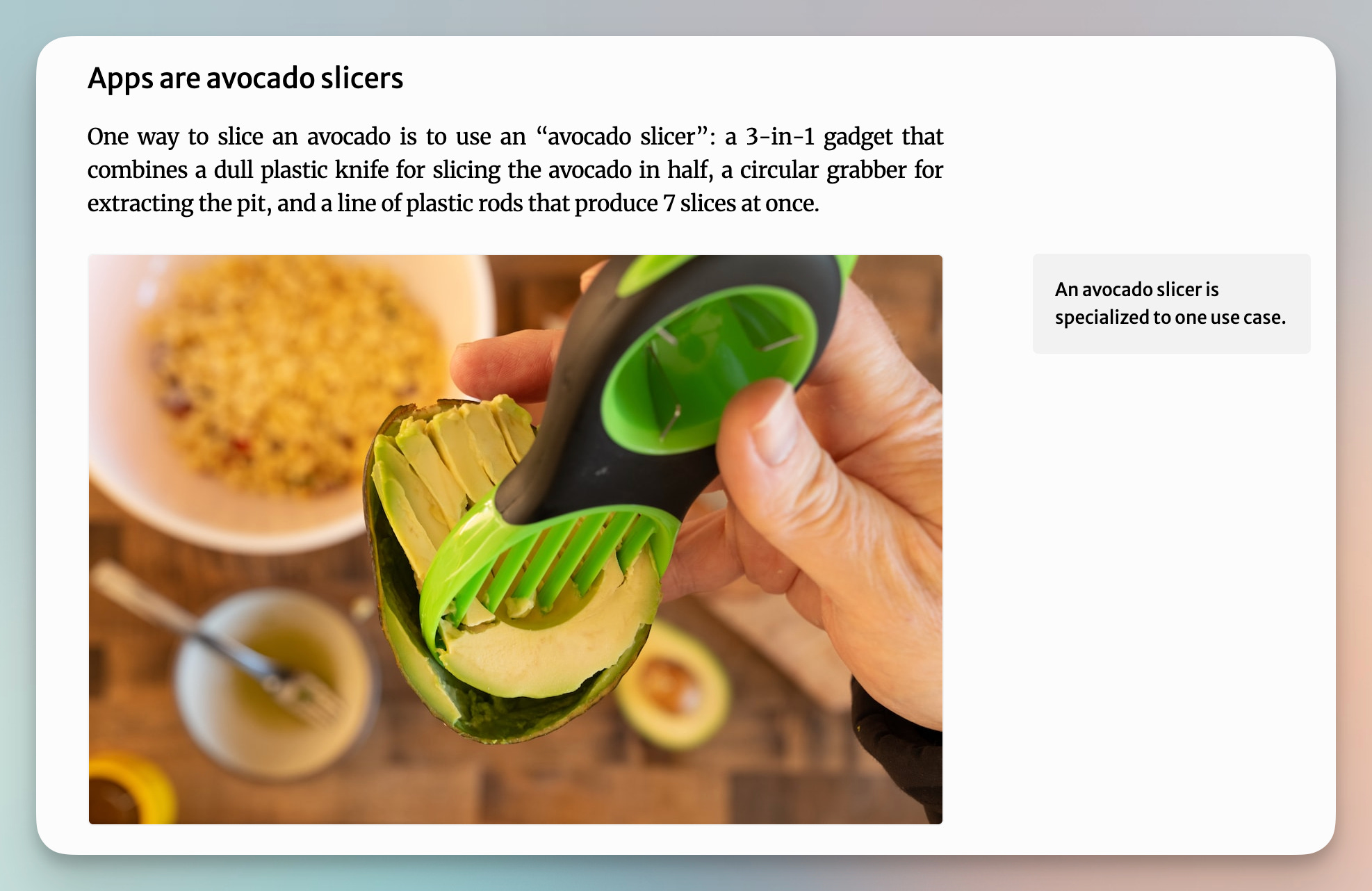
Are we entering a world in which avocado cutter (= apps) diminish in importance to the benefit of interoperable tools? Recently, I spotted people sharing “idea” files to feed your agent rather than software like OpenAI Symphony or Karpathy LLM Wiki.
#5
Most clicked link 1y ago.
WTF is activation and why should you care? • 7 min read • #data
Activation isn't just some vague "aha moment": it's the first actionable metric that impacts all the others, and generally its a good proxy for the impact of product launches. Unfortunately, finding it can be hard:
- it’s usually unique to your product, rarely a single event, and sometimes requires the user to do something multiple times.
- Finding your activation metric requires testing multiple event combinations against retention rates. In this article Posthog (+10 products) shares how they do it.

🗄️ Recently saved
Links worth reading that I saved, but did not highlight:
- Shreyas on why product sense may become even more valuable in the AI age (related #1)
- Cat Wu on how the PM playbook breaks when building keeps moving so fast, and what to do about it
- One of the most important watch on AI + Engineering, a conversation between Simon Willison and Lenny where Simon does a great job at explain how to leverage AI agents to increase quality, not just speed (highly recommended).
—
Thank you for reading this far.
Until next time!
Olivier
Share → Please help me promote this newsletter by sharing it with colleagues (tap the refer button) or consider liking it (tap on the 💙, it helps me a lot)!
About → Productverse is written by Olivier Courtois (15y+ in product, Fractional CPO, coach & advisor). Each “PM Snacks” features handpicked links to help you become a better product maker, and each “AI Bites” is a deep dive in AI-enabled workflows.