

Hey everyone,
For a long time, being a product person meant prioritizing ruthlessly, and unfortunately finding new (elegant) ways to say no. Cheap AI development changes that conversation quite a bit: limited engineering capacity is no longer a convincing reason to reject an idea.
But we still need to choose, and explain why some work deserves our attention. What should improve? What could get worse? What concern are we missing?
The articles below explore these questions, from early user tests to leadership communication and retention choices.
Please support this newsletter by sharing it with your colleagues or liking it (tap on the 💙).
Enjoy!
🍭 Snacks
#1
The Early Access Playbook v1.0 • 17 min read • #discovery #execution
Now that AI made prototypes cheap to build, I believe product teams should spend less time researching before putting something in front of users. Build sooner, but be clear about what you are trying to learn.
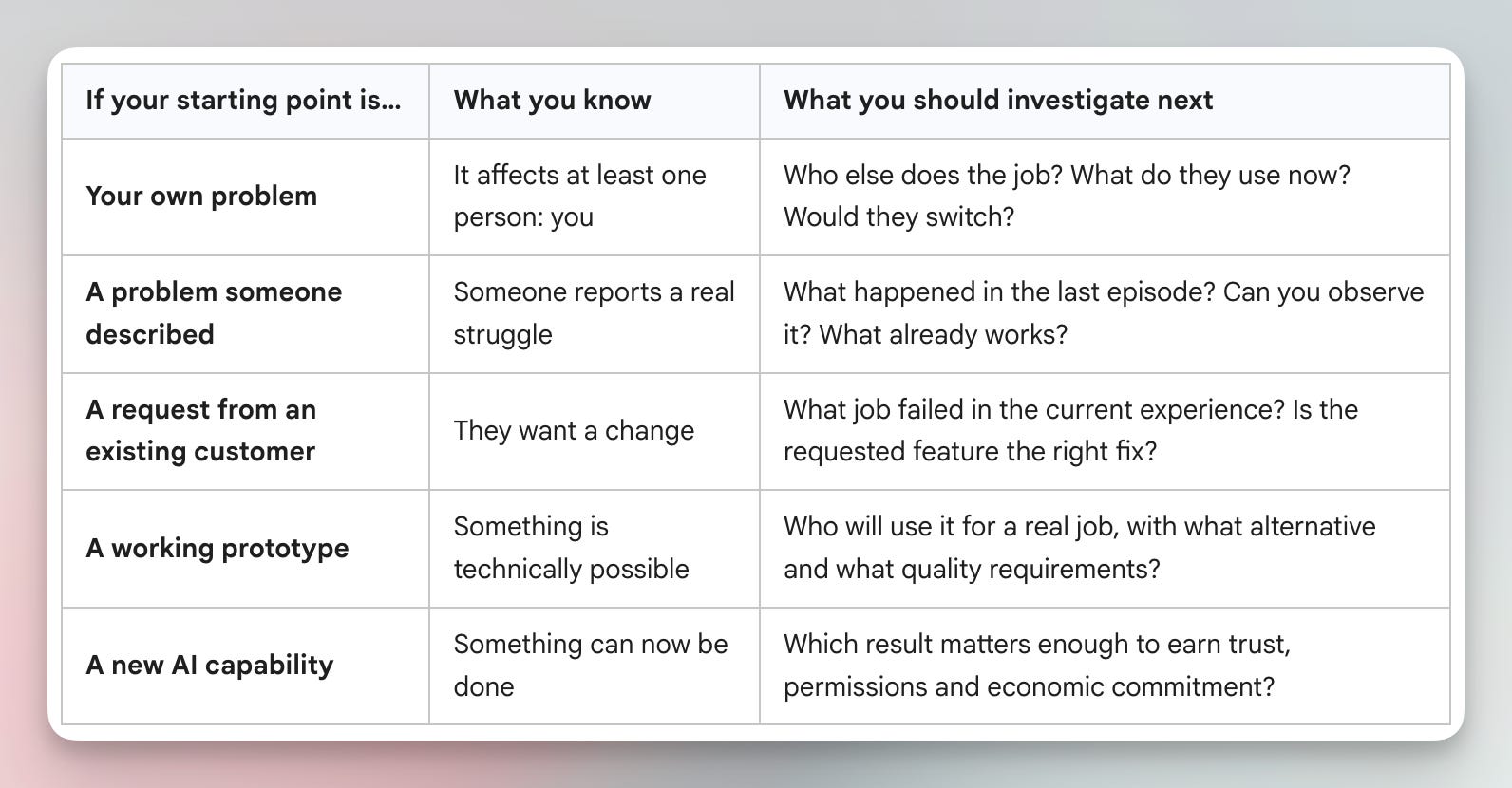
Hiten Shah’s playbook is long, so I recommend checking the 6-play table near the beginning. Then, do enough research to choose the next useful test, and run it. Return to the problem when the result challenges your assumptions.
#2
The Total Impact Matrix • 8 min read • #strategy #prioritization
In most conversations, people underestimate the consequences of adding more, especially since AI can build. Beyond the usual suspects: maintenance costs increasing, and users having more to learn… we should not forget that some features could actively damage the product or the business.
Itamar Gilad’s “expanded” matrix maps the value created for users / for the company, and remind us that either can be negative. A change might improve short-term revenue while making the experience worse, or even please users while creating costs the business cannot support.
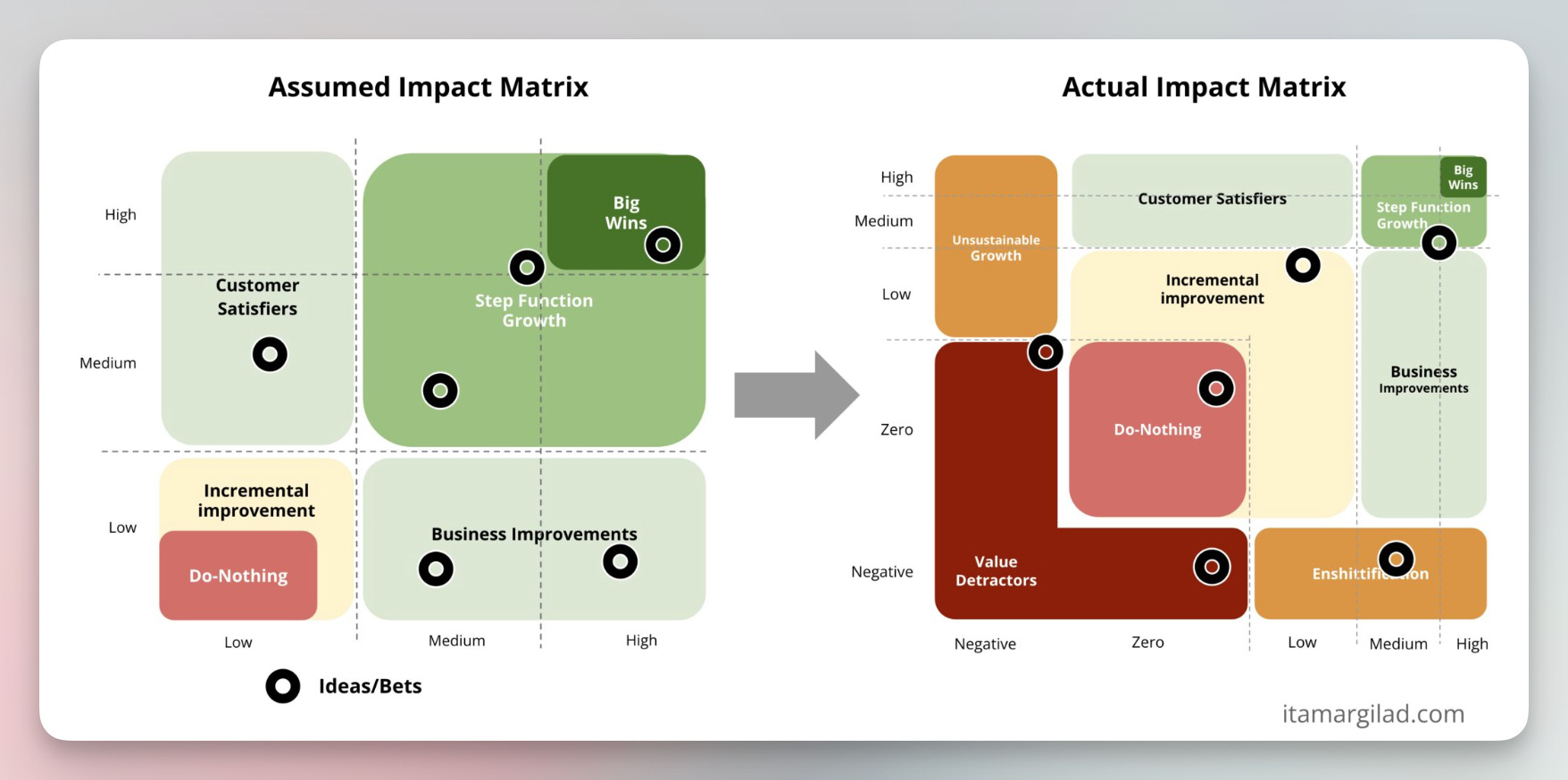
My advice: before adding another feature, explain what should improve and what could get worse. Then test those assumptions. Being easy to build gives us little evidence that an idea deserves to exist.
#3
Grounded Authority: Stop Explaining. Start Leading. • 5 min read • #leadership
When someone keeps challenging your priorities, another explanation of your process may achieve little… I would first try to understand what they need to protect, and make sure you are answering the concern behind the question instead. That’s what Stephanie Leue calls the “trust tax” in her article.
#4
Why retention is so hard for new tech products • 18 min read • #data #strategy
Andrew Chen has written many times about retention. This piece is about the difficulty of making new software part of people’s lives. And I believe this one connects the articles in this edition: our chances of success still depend on the questions we ask before committing to more work.
What need are we serving? How often does it return? What do people already do about it?
I think these questions matters even more when AI lets us build almost anything quickly, and and conflate speed with impact.
#5
Most clicked link 1y ago.
Which AI should you use as your copilot? • Nov 2025 • 5 min read • #AI
Last year I shared a few articles in the “AI Bites” section of this newsletter to explain how to leverage AI tools as product builders. I stopped since then, cos keeping up with the speed of new features / tools being released, was quite difficult! Anyway, this article explained why connectors were important to create your PM OS / Agent.
🗄️ Recently saved
Links worth reading that I saved, but did not highlight:
- Removing features is a product skill worth practising (connecting to this week’s edition)
- Try writing the launch caption before building the product…
- Remember the Mac’s breathing sleep light? What a work of art!
- Agent output still needs our critical thinking.
—
Thank you for reading this far.
Until next time!
Olivier
Share → Please help me promote this newsletter by sharing it with colleagues (tap the refer button) or consider liking it (tap on the 💙, it helps me a lot)!
About → Productverse is written by Olivier Courtois (15y+ in product, Fractional CPO, coach & advisor). Each “PM Snacks” features handpicked links to help you become a better product maker, and each “AI Bites” is a deep dive in AI-enabled workflows.