

Hey everyone,
There's a fascinating gap opening up between the AI conversation on social media and what's actually shifting inside product teams (heard of openclaw?).
The headlines debate disruption and replacement. The practitioners? They’re sharing incremental improvements to how they prototype and ship, questioning whether our processes still holds, even steering how AI form opinions about their products. So tag along to discover how these seasoned professionals are quietly reinventing the way they build.
Please support this newsletter by sharing it with your colleagues or liking it (tap on the 💙).
Enjoy!
🍭 Snacks
#1
Is AI Disrupting Product Development? • Feb 2026 • 10 min read • #AI #strategy
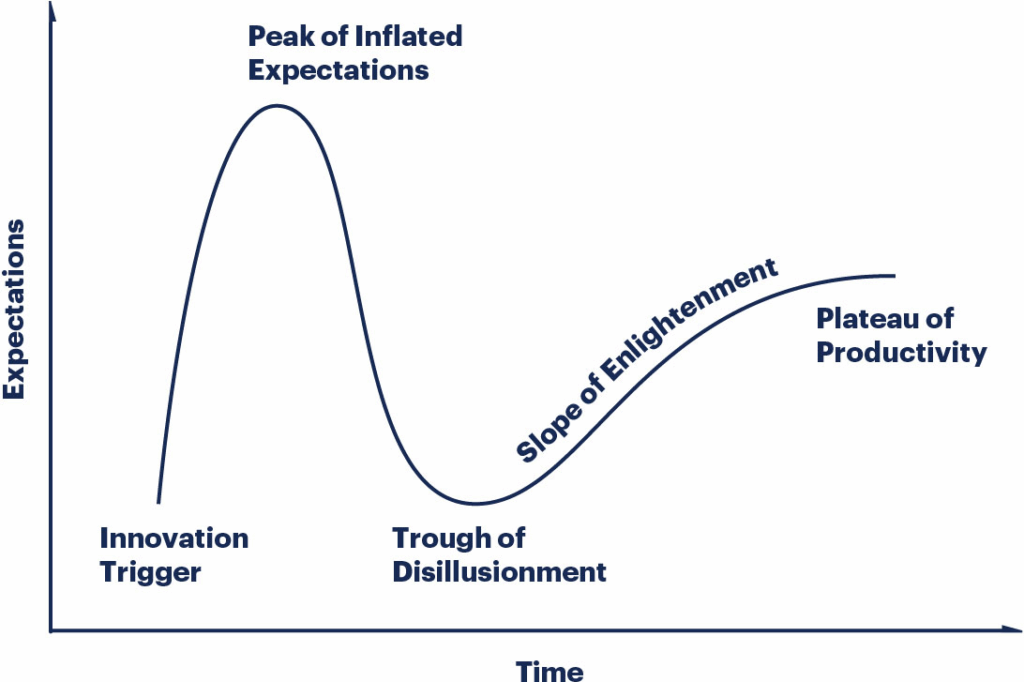
Itamar Gilad asks: are we in the inflated expectations phase of the hype cycle? The answer is more nuanced than your LinkedIn feed might suggest…
Productivity claims are overblown. Teams do ship faster, but it’s useless if you’re just delivering more waste. Strategy, intentionality and research are more important than ever.
The real edge is using AI to accelerate product discovery. If you’re not experimenting here, you’re missing out. For example start with extracting insights, pressure-testing assumptions, running simulations, using synthetic users to validate user interview scripts or even user flows (non exhaustive list).
#2
Field study: Prototypes over mockups • Feb 2026 • 9 min read • #design #AI
Here’s what’s actually changing at the craft level, lot of designers, like Edouard at Dust stopped relying only on Figma and switched to interactive prototypes built in code. It’s probably why Figma just announced a code to figma workflow which closes the loop.
Prototyping in code means what you see is what ships. Same React components, same design system, same tokens. No translation loss between intent and implementation.
AI has flipped the cost-benefit of designers coding. Edge cases, state changes, empty states, all testable before any spec gets written. Static mockups start to feel like overhead.
I would add that it also enables vibe-designing (I do it all the time): explain to AI a problem, and targeted outcome, then ask AI to explore +3 variations of a screen or flow. Embrace accidents, and unusual ideas before committing.
#3
The Product Perception Loop • Jan 2026 • 6 min read • #AI #execution
ChatGPT, Perplexity or Gemini are forming an opinion about your features, your positioning, your competitive standing, and probably affecting wether buyers shortlist your product or not.
The Product Perception Loop is the system to close the gap: build a Golden Set of buyer-facing prompts → run them across major LLMs → score responses for accuracy, attribution, and differentiation → adjust your context and positioning assets → repeat.
Tools like the one we shared in AI Bites 4 could be a part of the solution to make sure you expose the most up-to-date information to the outside world.
#4
Don’t Trust the Design Process • Jan 2026 • 23 min watch • #design #AI
Jenny Wen (Anthropic) exposes in this thought provoking conference how AI, rapid prototyping, and smaller teams force designers to ditch the old linear playbook: research, ideate on post-its, vote, design, prototype, test, ship.
The best practitioners start from solutions, obsess over details and work backwards. Closer to what the Apple design lab does. She argues intuition and taste lead to the most outstanding work.
Research still matters, but its role is shifting. Less “discover what to build from a blank slate,” more “validate what you’ve already sensed from the material.”
The rigid handoff logic between design phases is dissolving. When you can build and observe directly.
#5
Most clicked link 1y ago.
The Duolingo Handbook • Feb 2025 • 12 min read • #culture
A pretty high-level piece worth skimming through. Keep in mind that Duolingo is a true product-led company, with great monetization (enabling the focus on long-term mission), great branding and data-driven culture. Some highlights:
- Their principles: Take the long view (“we’re creating a 100-year brand”, “we’re building long-term user retention first”), Raise the bar (“V1 not MVP”, “we hire exceptional people”), Ship it (“we run hundreds of experiments”), Show don’t tell (“when we disagree, we test ideas and let the metrics decide), Make It Fun (“built on play”)
Some ideas worth trying in our companies?
1/ “99 bad ideas” methodology for ideation of bold ideas (= asking ridiculous, unlikely questions)
2/ Monthly “Raise the Bar” sessions to critique designs and push for world-class quality
3/ Adapt their “green machine” framework (1. staff with great people, 2. define success, 3. set guardrails and think long term, 4. build and setup feedback loops, 5. execute with urgency and excellence, and 6. double down on what works, stop what doesn’t).
🗄️ Recently saved
Links worth reading that I saved, but did not highlight:
- Elena Verna on the short window to get radically ahead by going AI-native.
- Claude Code for Product Managers: complete course.
- Nikunj Kothari: a controversial take: PMs are uniquely suited to thrive in the AI era. Good optimistic counterpoint to Itamar’s reality check.
- We transition from a world of “10x engineer” to “100x employee”? Could be a myth, but I definitely start to see signs of it.
—
Thank you for reading this far.
Until next time!
Olivier
Share → Please help me promote this newsletter by sharing it with colleagues (tap the refer button) or consider liking it (tap on the 💙, it helps me a lot)!
About → Productverse is written by Olivier Courtois (15y+ in product, Fractional CPO, coach & advisor). Each “PM Snacks” features handpicked links to help you become a better product maker, and each “AI Bites” is a deep dive in AI-enabled workflows.
Thank you for the shout out on the Product Perception Loop. Enjoyed the snacks too!